Live-In vs Live-Out Yaya: Which Is Right for Your Family?
One of the first decisions Filipino families face when hiring household help is whether they want a live-in or live-out arrangement. Here's what each really means — and how to choose.
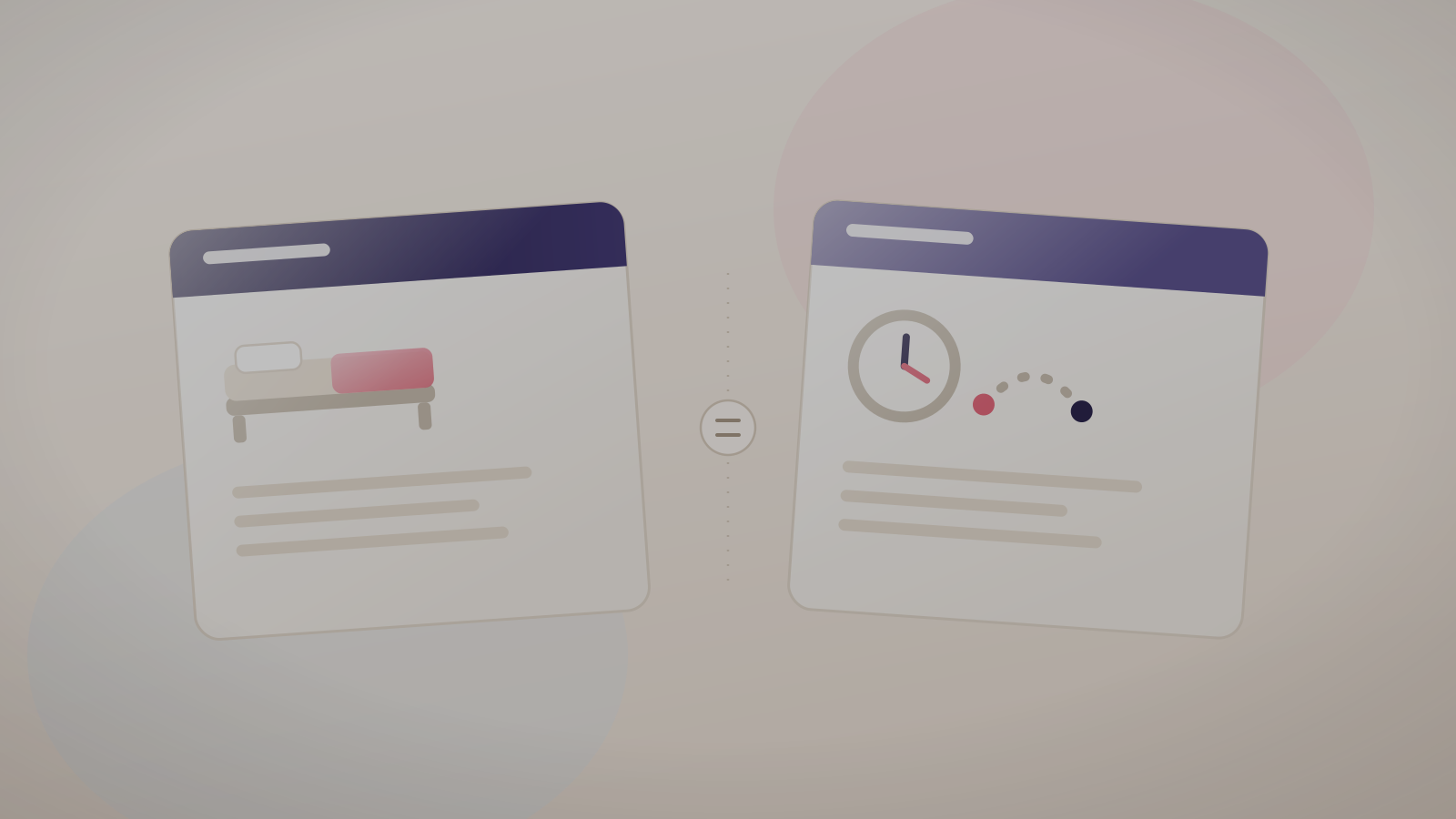
Quick take: Live-in yayas typically cost ₱4,000–₱8,000 less per month than live-out but require you to provide accommodation and meals. Live-out yayas cost more in wages but leave at the end of their shift — giving your family private home time. Neither is automatically better; it depends on your schedule, your home, and your family culture.
What's the difference?
A live-in yaya (or kasambahay) lives in your home full-time. She has a room (or designated sleeping area) in your house, eats with your family or separately, and is available beyond a fixed shift — particularly useful for night feeds, sick days, or early-morning departures.
A live-out yaya comes to work on agreed hours — typically 8 to 10 hours a day — and goes home at the end of her shift. She has her own home, her own family, and her own evening. You get childcare and household help during the day; she gets her nights and weekends largely to herself.
Both arrangements are fully covered by Batas Kasambahay (Republic Act 10361) — the Philippine domestic workers law that sets minimum wages, mandatory benefits, rest days, and termination rules.
Cost comparison
The numbers below are typical market rates in Metro Manila for 2026. Rates in Cebu and Davao are generally 20–30% lower.
| Arrangement | Typical monthly wage (NCR) | Add: employer costs |
|---|---|---|
| Live-in (entry, 0–2 yrs) | ₱10,000 – ₱14,000 | + lodging, meals (~₱3,000–5,000), SSS/PhilHealth/Pag-IBIG (~₱1,500–2,500) |
| Live-in (experienced, 3+ yrs) | ₱14,000 – ₱20,000 | + lodging, meals, benefits |
| Live-out (full-time, 8 hrs/day) | ₱12,000 – ₱18,000 | + transport allowance (~₱1,000–2,000), benefits |
| Live-out (experienced, 3+ yrs) | ₱16,000 – ₱24,000 | + transport allowance, benefits |
When you factor in housing and food for a live-in yaya, the total cost gap narrows considerably. The salary is lower, but the in-kind expenses close most of the difference. The real financial win with live-in is coverage: you get evenings and early mornings included, which would otherwise require overtime pay from a live-out helper.
Privacy considerations
This is the most personal part of the decision — and the one families discuss least honestly. Having someone living in your home changes your family dynamic.
Common adjustments families make with a live-in yaya:
- Private adult conversations happen behind closed doors or after the yaya retires for the evening
- Family arguments, marital disagreements, or difficult parenting moments are observed
- Weekend rhythms change — even on her day off, she may be in the house
- Children form strong emotional bonds, which is beautiful but can make transitions harder
None of these are reasons to avoid a live-in arrangement — millions of Filipino families make it work beautifully. The families who struggle are usually those who didn't set expectations clearly from the start. A simple house agreement (set times for personal use of common areas, clarity on "off hours") makes an enormous difference.
For live-out yayas, your evenings and weekends are your own. Many dual-income couples in Metro Manila choose live-out specifically because they want those private family hours after 6pm — even if it means paying a slightly higher rate.
Flexibility and scheduling
Live-in arrangements are more flexible on paper — she's there when you need her. In practice, this flexibility can become a grey area. Batas Kasambahay requires at least one rest day per week and limits on "on-call" expectations. Families who treat live-in arrangements as "always available" without agreed boundaries quickly burn out their yaya — and face high turnover.
Live-out arrangements are more structured. Agree on start and end times at hiring, pay overtime properly if you need extra hours, and she plans her life around a predictable schedule. This structure is actually a benefit for many families: it forces clear communication about needs, rather than informal expectations that build resentment.
For newborns and infants, live-in is almost always the practical choice — the unpredictability of feeding and settling schedules makes a fixed-shift arrangement extremely difficult in the first few months.
Find your yaya on Pinoyaya
Browse ID-verified live-in and live-out helpers across the Philippines. Filter by arrangement, location, and experience. ₱699 for 30 days of full access.
Get the Pinoyaya app →What families in Metro Manila, Cebu, and Davao typically choose
Patterns vary by city and household type:
- Metro Manila condo families often start with live-out, then switch to live-in when they have a second child — the condo guest room becomes the yaya room.
- Metro Manila house families with a dedicated helper's room almost always go live-in. The setup is purpose-built for it.
- Cebu and Davao families tend to prefer live-in arrangements at higher rates than Manila — the market is tighter, and live-in yayas are considered more stable hires.
- OFW and expat families with only one parent present at home almost universally choose live-in, especially for infant and toddler care where a single adult needs backup.
- Families with older children (school-age, no infant needs) increasingly prefer live-out — the after-school window is all they really need.
Legal requirements under Batas Kasambahay
Both live-in and live-out arrangements are covered equally by RA 10361. The key rules that apply to both:
- Written employment contract — required for all domestic workers, specifying duties, salary, rest days, and accommodation arrangement
- SSS, PhilHealth, and Pag-IBIG registration — mandatory if the worker earns at or above the threshold (currently: if you pay PhilHealth contributions depend on salary band; SSS is required regardless)
- 13th-month pay — equivalent to one month's salary, paid in December
- 5 days paid service incentive leave per year after 1 year of continuous service
- One rest day per week minimum (24 consecutive hours off)
- For live-in yayas specifically: the employer must provide adequate food, sleeping quarters, and access to toilet and bathing facilities at no cost to the worker
One important distinction: live-out helpers are not entitled to free accommodation, but many employers offer a transport allowance — typically ₱1,000–₱2,000 per month — to offset their commute. This is not legally required but is standard practice and helps retain good helpers.
How to decide
A simple checklist:
- Do you have a spare room? No suitable room = live-out, unless you're willing to create one.
- Do you have an infant or child under 2? Live-in makes the first 18 months significantly more manageable.
- Do both parents work irregular hours? Live-in provides coverage for early mornings, late nights, and travel.
- Is privacy important to you as a couple? Live-out gives you your evenings back.
- What's your budget? Run the true total cost for both (wages + in-kind + benefits) before deciding on salary alone.
Ready to find your yaya?
Whether you need live-in or live-out, Pinoyaya connects you with ID-verified helpers across the Philippines. Browse profiles, message directly, and hire with confidence.
Find verified yayas →Wage floors and contribution tables change periodically. Verify current figures with dole.gov.ph, sss.gov.ph, philhealth.gov.ph, and pagibigfund.gov.ph. This guide is for general information only and is not legal or tax advice.