Hiring a Yaya Direct vs Through an Agency: An Honest Comparison
Filipino families have two main ways to find a yaya: through a placement agency, or by hiring directly. Each has genuine trade-offs. Here is what you actually need to know before deciding.
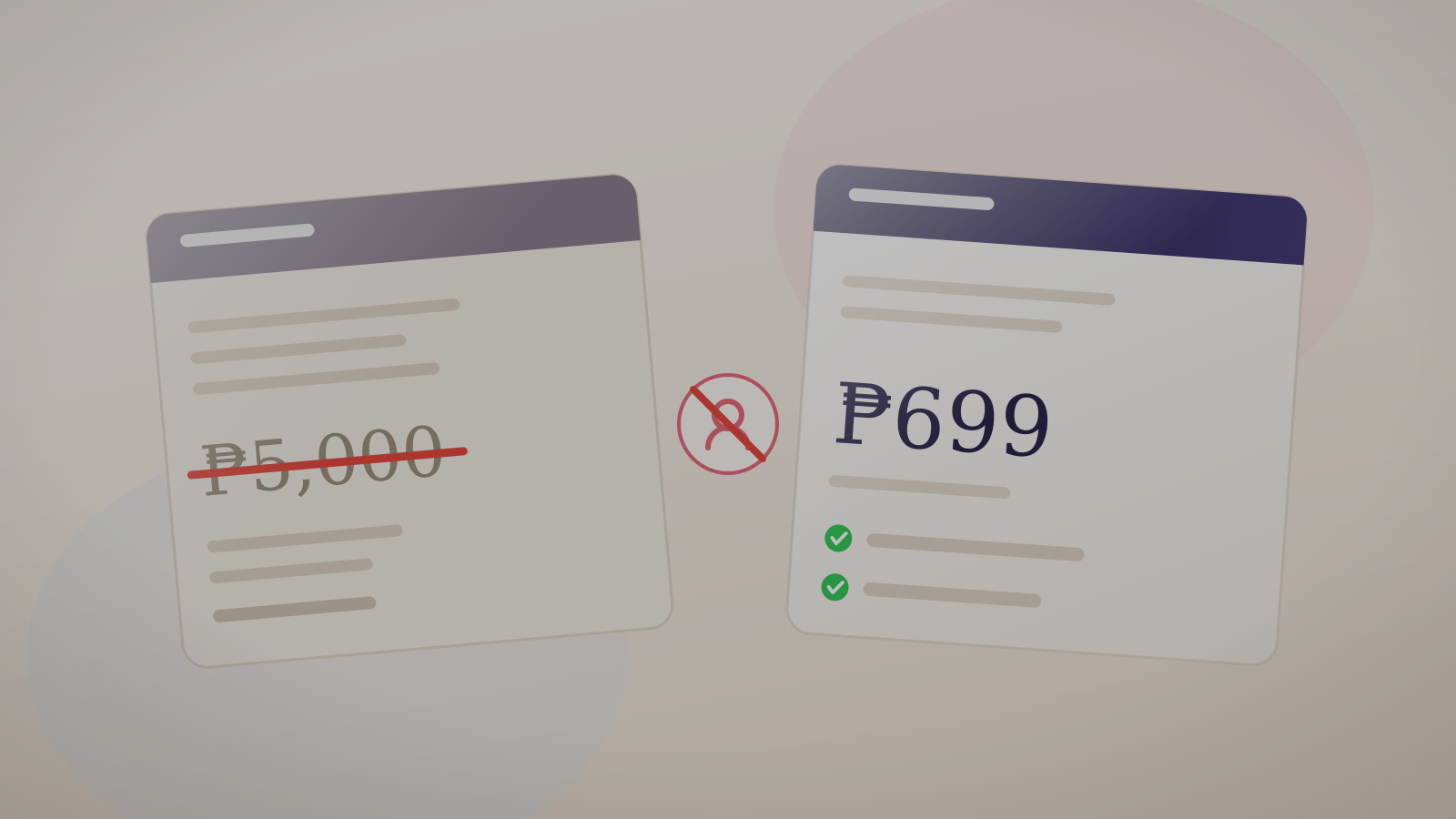
Bottom line up front: Agencies add a placement fee of roughly ₱3,000–₱8,000+ and handle initial sourcing, but their vetting quality varies widely and you typically have limited visibility into what they actually checked. Direct hire gives you full control and no placement fee — but requires more effort upfront. The deciding factor isn't the method; it's verification quality regardless of how you find her.
How agencies work
A domestic worker placement agency maintains a roster of job-seeking helpers. When you contact them, they match you with candidates from their database, arrange interviews, and charge you a placement fee once you successfully hire someone.
What agencies typically do:
- Interview candidates and conduct basic background checks (though the depth varies enormously by agency)
- Check references from previous employers
- Sometimes require candidates to complete training before listing them
- Provide replacement guarantees if the hire doesn't work out within a defined period (typically 30–90 days)
What agencies typically do not do (unless you confirm specifically):
- Independent identity verification against government-issued documents
- Systematic background checks (NBI clearance is often required of the candidate but not independently verified by the agency)
- Ongoing accountability once placement fees are paid
Agency placement fees in the Philippines typically range from ₱3,000 to ₱8,000 for domestic workers, with some specialised agencies (infant care specialists, bilingual yayas) charging significantly more. Some agencies also charge the helper a fee on her side — which is legal under DOLE rules up to a limit, but is worth being aware of.
How direct hire works
Direct hire means you find and vet the yaya yourself — through word of mouth, social media groups (Facebook yaya-hiring groups in Metro Manila are active), community networks, or an app like Pinoyaya where helpers have self-created profiles.
The advantage: you pay no placement fee, and you control every step of the vetting process. You decide which documents to check, which references to call, and what questions to ask. You are not relying on an agency's assessment — which may or may not be thorough.
The challenge: the sourcing and vetting process takes time and requires some structure to do well. Families who rush direct hire and skip identity verification are exposed to more risk than they realise.
Cost comparison
| Cost item | Agency hire | Direct hire |
|---|---|---|
| Placement fee | ₱3,000 – ₱8,000+ | ₱0 |
| Monthly salary | Market rate (same as direct) | Market rate |
| SSS / PhilHealth / Pag-IBIG | Your responsibility (same) | Your responsibility |
| Background check costs | Often bundled (unclear what's done) | ₱115–₱400 (NBI clearance, if you request it) |
| Replacement if hire fails | Sometimes included (30–90 day window) | Restart the search yourself |
Over a year, the salary is the same either way. The upfront placement fee is the primary financial difference — and for many families, the question is whether agency peace of mind is worth ₱5,000–₱8,000.
Direct hire with verification built in
Pinoyaya lets you browse and hire directly — no placement fees — while helpers who complete identity verification carry the ID-Verified badge. You get the cost advantage of direct hire and the safety advantage of verified identity.
Browse verified yayas →Accountability comparison
This is where the agency pitch sounds better than it often is in practice.
Agencies: In theory, the agency is accountable for sending you a qualified candidate. In practice, once the placement is made and the fee is collected, most agencies have limited ongoing involvement. If your yaya turns out to have provided false references — or if an issue arises six months in — the agency's replacement guarantee has typically long expired.
Direct hire: You are fully accountable for your own vetting. If you skip identity verification or reference checks and something goes wrong, there is no agency to fall back on. This is a real risk — but it is also a risk you can mitigate completely by doing the vetting properly yourself.
The honest truth: neither method automatically produces a safe hire. What produces a safe hire is rigorous vetting — identity verification, reference checks, and a structured trial period — regardless of how you found the person.
Speed comparison
Agencies typically take 2 to 6 weeks from initial enquiry to a candidate being placed, depending on their roster and your specific requirements. Some agencies can move faster; provincial agencies or those with limited databases can take longer.
Direct hire through community networks or an app is typically much faster — days to a week for initial matches, with the timeline governed by your own interview and reference check process. Families who have a clear idea of what they need can move from search to trial start in under two weeks.
What happens if it doesn't work out
This is one of the genuine advantages of agencies: most reputable ones offer a free replacement within 30 to 90 days if the initial placement fails. This is worth asking about explicitly — what triggers the replacement guarantee, and what is excluded?
With direct hire, if the trial does not work out, you restart your search. This is less convenient but not catastrophic if you structured your trial period well (see our trial period guide) and know what to look for next time.
Why verification matters more than who does the hiring
The most important safety step — verifying that the person in front of you is who she says she is — is something both families and agencies sometimes skip.
For direct hires, this means:
- Checking a valid government-issued ID (PhilSys, UMID, driver's licence, passport)
- Confirming the ID matches the face and the name she introduced herself with
- Calling at least one previous employer reference (not just messaging)
- For long-term arrangements, requesting an NBI clearance (the helper pays the ₱115 fee or you can assist)
Platforms like Pinoyaya perform identity verification on every helper before they can be found in search — so the baseline check is already done by the time you message a candidate.
For agency hires, ask the agency directly: "What ID documents did you check? Did someone physically verify her identity against those documents?" A quality agency will answer clearly. An evasive answer is a signal to ask more questions before paying the placement fee.
Find your next verified yaya on Pinoyaya
No placement fees. No agency middleman. Look for the ID-Verified badge on Pinoyaya. Browse profiles, message directly, and start your trial with confidence. ₱699 for 30 days of full access for families.
Get the Pinoyaya app →This guide is for general information only. For specific legal questions about domestic worker placement, consult DOLE or a Philippine labour lawyer.