Hiring a yaya from abroad: a guide for OFW families
Whether you're arranging a yaya for your kids back home, or a kasambahay to care for your aging parents, hiring from overseas adds a hard layer: you can't be in the room. Here's how to find, vet, and hire a trustworthy helper in the Philippines — remotely and safely.
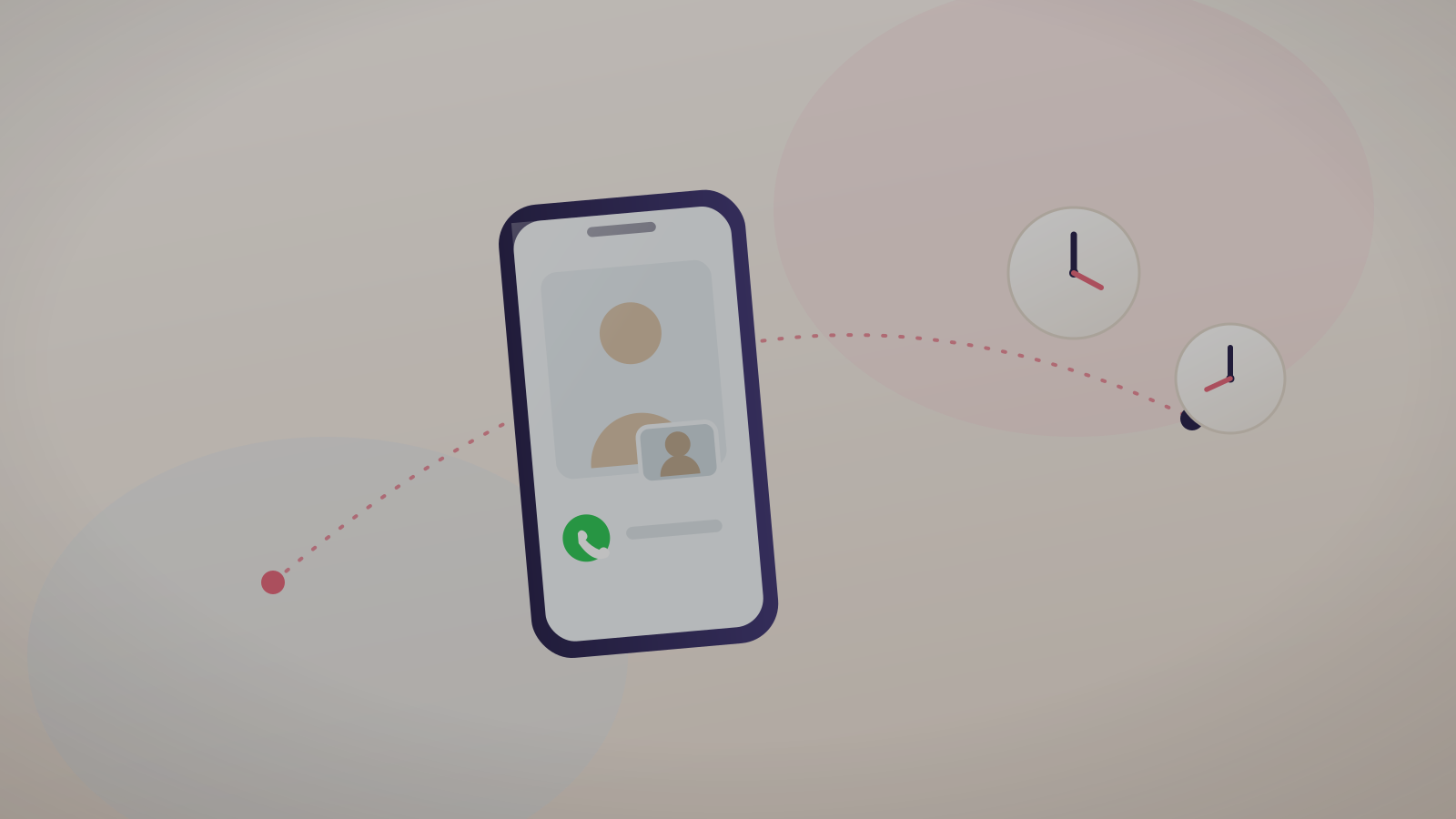
Millions of Filipino families are run, in part, from abroad. You're in Dubai, Riyadh, Singapore, Hong Kong, or Toronto — and the people you love most are back home, needing care you can't give in person. Arranging a yaya for your children or a kasambahay for your parents from thousands of kilometres away is one of the most stressful things an OFW does.
The good news: it's far more do-able now than it was even a few years ago. The bad news: remote hiring is also where scams and bad matches happen most. This guide is about getting the upside without the downside.
The two big risks of hiring remotely
Almost every horror story OFWs tell comes down to one of two things:
- The person isn't who they claimed to be. Fake names, borrowed photos, "ghost" helpers who collect a deposit and disappear. When you can't meet face to face, identity is the first thing that gets faked.
- The match looked fine on chat but fell apart in person. Without a proper interview and a clear contract, small mismatches become big problems — and you're not there to catch them early.
The whole process below is designed to neutralise both.
Step by step: hiring from overseas
Start with identity-verified candidates only
This is the single most important rule for remote hiring. Don't start from a random Facebook group where anyone can post under any name. Start where helpers can prove their identity before you ever message them. On Pinoyaya, yayas and housekeepers can pass a government-ID-plus-live-selfie check and carry the ID-Verified badge — so the person you're chatting with is confirmed to be real and who she says she is. From abroad, that one safeguard removes the scariest unknown. (More on exactly what that check covers: what "identity verified" actually means.)
Shortlist by what your family actually needs
Be specific. A yaya for a newborn is a different hire from a kasambahay for elderly parents (which may need patience, mobility help, and medication reminders) or a housekeeper for a home that's mostly empty during the day. Filter by city, experience, category, rate, and live-in vs live-out. Then read each helper's own description of their work — and ask for references you can call yourself.
Chat first — keep it on-platform
Use in-app chat to ask your first round of questions before sharing any personal details or your family's home address. Keeping early conversations on-platform protects your privacy and gives you a record. Be wary of anyone who immediately pushes you to move to a private number or asks for money up front.
Do a real video interview
This replaces the in-person meeting — don't skip it. A 30-minute video call tells you more than 30 messages. You'll see her warmth, how she speaks about children or elderly care, whether she's calm and clear. Use the same questions you'd ask in person — our 10 questions to ask before hiring a yaya works just as well over video. Watch her face when you describe your specific situation.
Put a trusted person in the room
You can't be there — but someone you trust can. Ask a parent, sibling, or close relative who lives near your home to join the final interview in person, or to meet the candidate before she starts. A second set of eyes on the ground catches things a video call can't, and gives your family a familiar point of contact in the first weeks.
Sign a proper written contract
Remote or not, Batas Kasambahay (RA 10361) requires a written employment contract — and it protects everyone, especially when you're not physically present to resolve disputes. Spell out wage, schedule, rest day, benefits, and duties. Use our free Kasambahay contract template and the plain-English guide to the law. Have your on-the-ground relative witness the signing if you can't be there.
Set up legal pay and benefits
As the employer, you're responsible for the wage and for enrolling her in SSS, PhilHealth, and Pag-IBIG. Many OFWs send the salary through a trusted family member or a remittance channel directly to the helper — never through a stranger or an unverified "agent." Our benefits enrolment guide walks through registering her, much of which can now be done online.
OFW-specific red flags
From abroad, you're a target for shortcuts and scams. Walk away if you see any of these:
On Pinoyaya you pay only for app access (₱699/30 days) and the helper's wage — directly to her. Nobody legitimate asks an OFW to wire a deposit to secure a yaya.
If someone won't show their face on a live call, you cannot verify they match their profile. Non-negotiable for remote hiring.
The contract matters more when you're far, not less. Pressure to skip it is a warning sign.
Pay on the normal schedule once she's working. Large upfront payments to someone you've never met in person rarely end well.
Helping your family adjust — from afar
Once she starts, the first week still matters even if you're not there. Send your on-the-ground relative our first-week onboarding guide, agree on a simple weekly video check-in with the helper and your family, and keep paying on time. Distance makes consistency more important, not less — a yaya who's paid reliably, treated with respect, and checked in on tends to stay for years, which is exactly the stability an OFW family needs.
Find a verified yaya back home — from anywhere
Pinoyaya works wherever you are. Browse identity-verified yayas, kasambahays, and housekeepers anywhere in the Philippines, chat and video-interview securely, and hire direct. ₱699 for 30 days — no placement fee.
Get the Pinoyaya app →Related reading
- What "identity verified" actually means
- 10 questions to ask before hiring a yaya
- SSS, PhilHealth, Pag-IBIG: a yaya benefits guide
- A plain-English guide to Batas Kasambahay (RA 10361)
This guide is for general information only and is not legal or financial advice. The family that hires a kasambahay is the legal employer under Batas Kasambahay; Pinoyaya is a marketplace that connects families with identity-verified helpers and does not employ them.